Showing posts with label quotes. Show all posts

Monday, April 26, 2021

The Gospel According to Your Baptism ...


"The gospel is our power to know that the death and resurrection of Jesus actually accomplished our own death and our own resurrection.  Jesus did not die that I might live.  We say that as a wonderful shorthand, but taken by itself, it's not true.  Jesus did not die that I might live.  Jesus died so that I might die.  Jesus was buried so that I might be buried.  In Jesus, that's where I left all my guilt; all my shame; all my sins; buried there in that tomb two thousand years ago, abandoned.  And if I have died and been buried with Christ, that means I have been raised with Christ.  I am no longer beneath the domain of sin; beneath the tyranny of death.  I have been raised to new life in Him; with Him."

- Pastor Joe Carlson

Tuesday, March 23, 2021

A Meditation with both Palm Sunday and Good Friday in Mind ...


"My thesis that the practice of nonviolence requires a belief in divine vengeance will be unpopular with many Christians, especially theologians in the West. To the person who is inclined to dismiss it, I suggest imagining that you are delivering a lecture in a war zone (which is where a paper that underlies this ... was originally delivered). Among your listeners are people whose cities and villages have been first plundered, then burned and leveled to the ground, whose daughters and sisters have been raped, whose fathers and brothers have had their throats slit. The topic of the lecture: a Christian attitude toward violence. The thesis: we should not retaliate since God is perfect noncoercive love. Soon you would discover that it takes the quiet of a suburban home for the birth of the thesis that human nonviolence corresponds to God’s refusal to judge. In a scorched land, soaked in the blood of the innocent, it will invariably die. And as one watches it die, one will do well to reflect about many other pleasant captivities of the liberal mind."

- Miroslav Volf 

Exclusion and Embrace pgs. 303-304

Thursday, February 20, 2020

What is Success?


"People are successful in my book to the extent that they do something they care about.  If you can pull that off, I think you've won."

- Malcolm Gladwell, on Socrates in the City

Thursday, February 13, 2020

Autoculturalism


"The identities we are chattering about today tend to impose a kind of imperative to restlessly reinvent oneself; to construct - what I call - a culture of one.  We are less threatened by multiculturalism than by autoculturalism."

- Ken Myers, Mars Hill Audio Journal

Wednesday, October 2, 2019

An honest word, like a kiss on the face ...

"A good sermon makes a mole hill out of a mountain."

-my wife

 [after I preached a particularly long sermon...]

Monday, July 22, 2019

Against Heterosexuality by Michael Hannon [abridged]


Over the course of several centuries, the West had progressively abandoned Christianity’s marital architecture for human sexuality. Then, about one hundred and fifty years ago, it began to replace that longstanding teleological tradition with a brand new creation: the absolutist but absurd taxonomy of sexual orientations... 
Michel Foucault, an unexpected ally, details the pedigree of sexual orientation in his History of Sexuality. Whereas “sodomy” had long identified a class of actions, suddenly for the first time, in the second half of the nineteenth century, the term “homosexual” appeared alongside it...designating not actions, but people—and so also with its counterpart and foil “heterosexual.”...cementing these categories of hetero- and homosexuality in the popular imagination...Sexual orientation, then, is nothing more than a fragile social construct, and one constructed terribly recently. designating not actions, but people—and so also with its counterpart and foil “heterosexual.”
My own prediction is that we will see this binary thoroughly deconstructed within our lifetimes. But in my view, we proponents of Christian chastity should see the impending doom of the gay–straight divide not as a tragedy, but as an opportunity. More than that, I want to suggest that we should do our best to encourage the dissolution of orientation within our own subcultural spheres wherever possible...

Thursday, May 23, 2019

The Main Problem with the Media ... [might not be what you think]


"I think that the main problem with the press is not bias.  The complaint of those on the left and conservatives is that it is.  I think the main problem with the press, rather, is superficiality.  Their inability to go beyond the narrative structure of antagonist and protagonist; who's up and who's down; their inability to understand, frame, and report on issues that are not simply political.  The tendency is to force these kinds of cultural issues onto a political frame of reference; to see them only as struggles of power."

James Davison Hunter
in a Mars Hill Audio Journal interview with Ken Myers [ from 1994!]

... don't you want to keep reading???? [below]

Wednesday, July 4, 2018

The Bipolar Life of Ministry


"To identify with Paul's experience we do not need to be shipwrecked or imprisoned or lowered in a basket from a city wall. Even without the physical dangers of Paul's career, anyone who throws himself into the work of Christian ministry of any kind with half the dedication of Paul will experience the weakness of which Paul speaks: the times when problems seem insoluble, the times of weariness from sheer overwork, the times of depression when there seem to be no results, the emotional exhaustion which pastoral concern can bring on - in short, all the times when the Christian minister or worker knows he has stretched to the limits of his capacities for a task which is very nearly, but by God's grace not quite, too much for him. Anyone who knows only his strength, not his weakness, has never given himself to a task which demands all he can give. There is no avoiding this weakness, and we should learn to suspect those models of human life which try to avoid it. We should not be taken in by the ideal of the charismatic superman for whom the Holy Spirit is a constant source of superhuman strength. Nor should we fall for the ideal of the modern secular superman: the man who organizes his whole life with the object of maintaining his own physical and mental well-being, who keeps up the impression of strength because he keeps his life well within the limits of what he can easily cope with. Such a man is never weak because he is never affected, concerned, involved or committed beyond a cautiously safe limit. That was neither Jesus' ideal of life nor Paul's. To be controlled by the love of Christ means inevitably to reach the limits of one's abilities and experience weakness."

- Richard Bauckham, Weakness - Paul's and Ours  

Tuesday, February 27, 2018

Scripture Ought to Make You a More Interesting Person


"Why do the gospel writers read Israel's history in ways that look funny to modern sensibilities?  Is the notion of the fulfillment of Old Testament texts intellectually implausible?  The gospel writers summon us to a conversion of the imagination.  They summon us to become more interesting readers... the gospel writers are trying to make us more interesting people.  They are trying to make us more interesting readers who are not locked into this modernist literalism about everything.  I want to suggest to you that we will learn to read Scripture well only if our minds and imaginations are opened up by learning to read the Scriptural texts by learning to read in the 'figural' ways that the four gospel writers actually read Israel's Scripture.  The gospels teach us how to read the Old Testament.  And at the same time the Old Testament teach us how to read the gospels.  There is a circle of interpretation."

Richard Hays, "Do the Gospel Writers Misread the Old Testament?"


Tuesday, January 16, 2018

Deep Gospel-infused Beauty


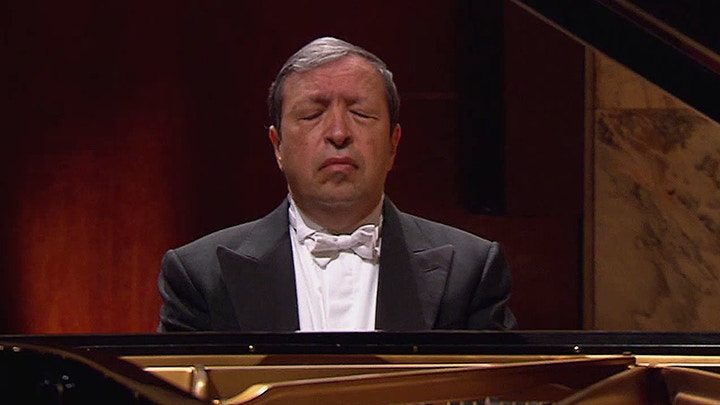
"Bach is inseparable from the words that he uses.  He's a religious composer and his outlook on life is told to us in the cantatas.  And even in the secular music, one has to embrace his worldview.  No matter how the voice leading it is so wonderful or the counterpoint is so wonderful, it goes beyond itself.  It tries to tell us a message and that message is usually complicated.  It's not quite simple.  So I think there's a lot more to Bach than the surface."

- Murray Perahia

Saturday, November 25, 2017

The Banality of Evil


In Macbeth, Shakespeare uses his considerable genius to express the abhorrent beauty of absolute evil... It's true that lady Macbeth and Macbeth are never more alive than when they contemplate killing the king.  They thrill with vitality and excitement.   But as soon as they commit the act, they're oppressed with the banality of evil.  And I'm not just talking about guilt.  To be sure they are both tormented by guilt.   But even more afflicting that Macbeth's guilt is his ennui.  His awesome will to power, magnificently manifested in Duncan's murder, gives way to an all-consuming listlessness.

He'll murder many more times, but each time it becomes more mechanical, more tiresome, more wearisome.  What really wears on Macbeth is the tedium of evil.   In his wickedness he cannot find contentment or joy or even desire.  There's nothing but this: tomorrow tomorrow and tomorrow creeping at its petty pace to the last syllable of recorded time.  And perhaps this is the ultimate truth of the tragedy.  When decency and goodwill give way to wickedness and evil, life loses its meaning.  It can be no more than a tiresome monotony.  A tale told by an idiot, full of sound and fury signifying nothing.


Professor Kent Lehnhof

Thursday, July 6, 2017

What Punishments of God are not Gifts?


This from a GQ interview.  Stephen Colbert describes the plane crash that suddenly killed his father and brother when he was 10 years old.
 “ ‘You gotta learn to love the bomb,’ ” he said. “Boy, did I have a bomb when I was 10. That was quite an explosion. And I learned to love it. So that’s why. Maybe, I don’t know. That might be why you don’t see me as someone angry and working out my demons onstage. It’s that I love the thing that I most wish had not happened.”…
I asked him if he could help me understand that better, and he described a letter from Tolkien in response to a priest who had questioned whether Tolkien’s mythos was sufficiently doctrinaire, since it treated death not as a punishment for the sin of the fall but as a gift. “Tolkien says, in a letter back: ‘What punishments of God are not gifts?’ ” Colbert knocked his knuckles on the table. “ ‘What punishments of God are not gifts?’ ” he said again. His eyes were filled with tears. “So it would be ungrateful not to take everything with gratitude. It doesn’t mean you want it. I can hold both of those ideas in my head.”
He was 35, he said, before he could really feel the truth of that. He was walking down the street, and it “stopped me dead. I went, ‘Oh, I’m grateful. Oh, I feel terrible.’ I felt so guilty to be grateful. But I knew it was true.”

Saturday, November 19, 2016

The Givenness of Things

"There is no freedom except when what we are, and do, corresponds to what has been given to us to be and to do."

-Oliver O'Donovan, The Desire of Nations

Monday, May 30, 2016

Francis Schaeffer on Punk Rock


"Why does human life have any value at all?  Not only are you going to die individually, but the whole human race is going to die.  Someday the world will grow too hot or cold and all you people will not only be individually dead, but the whole conscious life on this world will be dead and nobody will see the birds fly.  As you know, I don't speak academically, shut off in a scholastic cubicle.  I have lots of young people come to us from the end of the earth.  And they have gone to the end of this logically.  They realize what the situation is.  They can't find any meaning to life.  It's the meaning of the words "punk rock".  I must say that on the basis of what they're being taught in schools, that the final reality is only this material thing - they're not wrong; they're right."

- Francis Schaeffer

Wednesday, January 13, 2016

Islam: Mirror of Christendom


An abridged essay by Dr Peter J Leithart; the full essay is available here.

“For if anyone is a hearer of the word and not a doer, he is like a man who looks at his natural face in a mirror; for once he has looked at himself and gone away, he has immediately forgotten what kind of person he was.”
—The Epistle of James, 1:23-24

Deep in the pit of hell, the pilgrim Dante came across Mohammed, walking with his torso split open from chin to groin.  The surprise in this scene is not the gruesomeness of Mohammed’s punishment, but the place where this scene occurs: the ninth Bolgia of Malebolgia, in the subcircle of hell reserved for schismatics. Mohammed is not among the idolaters or the pagans, but among sinners being punished for breaking off from the Christian Church, all of whom, appropriately enough, have their bodies rent as retribution for rending the body of Christ.
In treating Mohammed as a Christian schismatic, Dante was not inventing a new perspective (he rarely did), but presenting views widespread in his time. Many in the Western medieval world believed that Mohammed himself had apostatized from Christianity.  Centuries before Dante, John of Damascus (675-749) treated Islam in the final section of his treatise de Haeresibus, calling it the “heresy of the Ishmaelites.”

Friday, December 25, 2015

Christmas Prayer of Praise and Adoration


Christmas prayer adapted from Augustine:

All praise to You, O King of Heaven and earth, this Christmas Sunday
For the incarnation;
As Adam was brought forth from the uncursed soil,
so You were born of a virgin;
When man’s Maker was made man,
that He Who made the Milky Way, might nurse at His mother’s breast;
the Bread hunger,
the Fountain thirst,
the Light sleep,
the Way be a tired Traveler;
the Truth slandered by false witness,
the Teacher flogged,
the Foundation hung upon a wooden beam;
that Strength weaken;
that the Healer be wounded;
and Life die.
For these great mysteries and for beautiful gospel of peace
we give You thanks today and forever.
Amen.

Tuesday, December 8, 2015


Cultures cultivate. A culture is more like an ecosystem than like a supermarket. And human persons, as encultured creatures, are generally less like independent rationally choosing shoppers than like organisms whose environment predisposes a certain set of attitudes and actions.
Cultures cultivate. Not that our activities are absolutely determined by cultural influences. We are rational beings, not just instinctual beings. We can make choices that go against the conventions sustained around us. We can lean into the prevailing winds, but only if we know how to stand somewhere solid. Only if we are not being carried by the wind. We need to be able to imagine alternative ways of perceiving reality.
Cultures cultivate, so if we want to offset the influence of cultural systems that distort or misrepresent reality, we need more than good arguments that analyze the distortions. We need cultural alternatives that provide opportunities for participating in a different way of telling the story of human experience.
For example, counteracting the materialistic reductionism of our time requires practices that convey to our imaginations the coherent unity of matter and spirit. Challenging the assumptions that human beings are best understood and best treated by social structures as autonomous choosers whose choices provide meaning in an otherwise meaningless universe requires settings in which submission and obedience to some order of things that precedes our willing is known as a delight and a blessing.
Distorted institutions and practices can’t be confronted only by arguments. They require well-ordered practices and institutions. Resisting cultural confusion is more than a matter of thinkingoutside the box. We need to be able to intuit outside the box. And to encourage well-ordered intuitions to those under our care, especially our children — because cultures cultivate.

Tuesday, October 27, 2015

God's Finger, My Forehead, and Her Intricate, Perfect Ears


[More than 10 years ago, in a seminary workshop outside of Greenville, SC, I heard a speaker read this passage.  Since then I've ruminated on it scores of times, though never remembering its author.  This morning, in a Ken Myers interview of Mary Eberstadt, I was delighted to hear it referred to again - with the author's name attached - Whittaker Chambers!  Enjoy.]

“It was shortly before we moved to Alger Hiss's apartment in Washington. My daughter was in her high chair. I was watching her eat. She was the most miraculous thing that had ever happened in my life. I liked to watch her even when she smeared porridge on her face or dropped it meditatively on the floor. My eye came to rest on the delicate convolutions of her ear — those intricate, perfect ears.

The thought passed through my mind: 'No, those ears were not created by any chance coming together of atoms in nature. They could have been created only by immense design.'

The thought was involuntary and unwanted. I crowded it out of my mind. But I never wholly forgot it or the occasion. I had to crowd it out of my mind. If I had completed it, I should have had to say: Design presupposes God. I did not then know that, at that moment, the finger of God was first laid upon my forehead.”

- Whittaker Chambers, Introduction, Witness

Friday, October 16, 2015

The Grave Importance of Church Funerals and Cemetery Yards


"[The problem is] not that our culture doesn't believe in God.  It's that our culture doesn't believe in death ... really.  And as a result, [we] don't really get the point.  Our culture is dedicated to distracting us from this inconvenient truth.  We are dedicated to being distracted from distraction by distraction."

- David Bentley Hart

Friday, September 25, 2015

The Cumulative Effect of Family Worship


"Family worship is an anchor and foundation for the rest of life.  When you sit with your family, read the Scriptures and pray together, you are giving them a touchstone they can relate to throughout their day and experiences.  It's not as if there's going to be direct one to one correspondence to what you talk about that day and what happened at school with their friends.  The effect is cumulative.  They don't remember what they had for dinner last Tuesday either.  But the effect in enabling them to grow is obvious.  ... You would never tell your family, 'I think we're just going to skip dinner tonight.' ... In the same way, the cumulative effect of teaching God's Word that informs their hearts and minds so that they can think Biblically and act Biblically as occasions arise in their lives... It is important to be consistent yet flexible."

- Timothy Witmer, professor of at Practical Theology at Westminster Seminary, 
author of The Shepherd Leader at Home