Showing posts with label the gospel. Show all posts

Monday, April 26, 2021

The Gospel According to Your Baptism ...


"The gospel is our power to know that the death and resurrection of Jesus actually accomplished our own death and our own resurrection.  Jesus did not die that I might live.  We say that as a wonderful shorthand, but taken by itself, it's not true.  Jesus did not die that I might live.  Jesus died so that I might die.  Jesus was buried so that I might be buried.  In Jesus, that's where I left all my guilt; all my shame; all my sins; buried there in that tomb two thousand years ago, abandoned.  And if I have died and been buried with Christ, that means I have been raised with Christ.  I am no longer beneath the domain of sin; beneath the tyranny of death.  I have been raised to new life in Him; with Him."

- Pastor Joe Carlson

Tuesday, March 23, 2021

A Meditation with both Palm Sunday and Good Friday in Mind ...


"My thesis that the practice of nonviolence requires a belief in divine vengeance will be unpopular with many Christians, especially theologians in the West. To the person who is inclined to dismiss it, I suggest imagining that you are delivering a lecture in a war zone (which is where a paper that underlies this ... was originally delivered). Among your listeners are people whose cities and villages have been first plundered, then burned and leveled to the ground, whose daughters and sisters have been raped, whose fathers and brothers have had their throats slit. The topic of the lecture: a Christian attitude toward violence. The thesis: we should not retaliate since God is perfect noncoercive love. Soon you would discover that it takes the quiet of a suburban home for the birth of the thesis that human nonviolence corresponds to God’s refusal to judge. In a scorched land, soaked in the blood of the innocent, it will invariably die. And as one watches it die, one will do well to reflect about many other pleasant captivities of the liberal mind."

- Miroslav Volf 

Exclusion and Embrace pgs. 303-304

Tuesday, May 12, 2020

10 Guidelines for Churches Considering Reopening


1. Make a full plan and ACTUALLY GET all necessary supplies before going public with it.  First of all, if you make a good plan, go public with it, and then find that you can’t get any of the gloves or Purell your plan depends on for another four weeks, your good plan just evaporated.  Furthermore, if you can’t get masks, then there’s a chance your dentist can’t either.  If you can’t get Clorox wipes, then there’s a chance the Dermatology office is also waiting in line.  If you can’t find hand sanitizer, then think about the local restaurant owner that you appreciate so much.  Only these peoples’ very lives depend on the speed at which they can get back up and running.
2. Know the plan for businesses/activities in your area… you are not a modern-day Martin Luther [or MLK Jr] if you have not taken the time to hear the other side.  Ignorant antinomianism is not civil disobedience in the cause of justice.  Know the criteria that are being used by your Governor, Mayor, or County authorities.  Take the time necessary to hear their thoughts and understand their approach.  It may not be as crackpot or Draconian as that guy on Facebook made it out to be.  Have you done your due diligence?  Start with the Johns Hopkins Guidelines to Governors for Phased Reopenings.  It’s a great, reasonable resource.
3. Know the plan of other churches in your area … don’t be slavishly bound to it, but don’t be too proud to be aware of and informed by what others are doing.  Like me, you might learn a thing or two from others in Christ’s body nearby.  There is also a strong possibility of an increased testimony from Christian unity as well as potential legal protection if you are able to act in concert with other churches in your local community.
4. Continue livestreaming – it is either disingenuous or unkind or both to give your high-risk folks “permission” to stay home during the uncertain transition-back period, and not continue to livestream for them during that time.
5. Consider Polling – finally a good reason for a congregational poll! … I’m almost always against church member polls, but in this case, there is a lot of value that can come to Church leaders by knowing where folks are – how many are comfortable returning?  How many would prefer to stay home another month?  How many would wear PPE?  How many would insist upon it?  How many would object to it?  This is really good information for those whose planning depends on willing participation from their folks.
6. Take Attendance – if you have multiple services, be specific.  The doctors are telling us a ‘cure’ is likely a long way away.  If someone in your church tests positive four months from now, it would be helpful to know which service they attended that week and who was near them.  For some techie churches, it may be as simple as a mid-service, wide-angle snapshot.
7. Eliminate high-touch surfaces as much as possible.  Passing offertory plates or communion trays from row to row, each touched by a hundred hands before making its way into yours… that shouldn’t be happening right now.  Consider going to bulletins or a projector as opposed to hymnals and prayerbooks [the traditionalist in me cringes to say it, but as a temporary measure, it’s worth considering.]  Put bulletins on chairs, rather than on a common pick-up table/basket.  Most churches don’t have automatic doors.  Consider propping doors open at start/close of services.  Our deacons are forming cleaning teams to wipe down arm rests, door handles, light switches, thermostats, bathrooms, etc. between services.  And our facilities manager just purchased an HVAC air purifier.  Lots of churches are investing in hand sanitizer dispensers by entry/exit points.  Don’t forget trashcans.  There will be lots more wipes, tissues, masks, and gloves than normal.  Where are these going to end up?
8. Think in terms of households.  Hey, it’s a category all over the New Testament! :-)  Medical guidelines suggest at least 6 feet of separation [more if singing btw] between households, not individual members.  The assumption being, everyone in the same household already shares the same level of exposure.  They don’t need to be separated from one another.  This may or may not help with seating.  Many reopening guidelines are based off of seating capacity, rather than a total number anyway.  Lots of churches are temporarily resuming service attendance on a sign-up basis.  Once the sign up list is full, assigned seating is arranged according to households.  A strange but effective approach for this unusual season.  Whatever your plan, be sure to have something in mind for those who might show up without signing up first [the same for those who arrive visibly sick or symptomatic.]  Even the most callous Calvinists among us would have a hard time turning away visitors at the door. :-)
9. Children’s ministries are in a different category – kids have zero concept of personal space and social distancing.  You know this.  So do our authorities and policymakers.  Kids’ activities are the last to resume.  If your church operations are interdependent so that you can’t restart regular worship services without children’s church going simultaneously, reopening will take longer.  In other words, the bigger your church, the slower your restart will likely need to be.
10. Expect big changes – Lowes, Walmart, McDonalds have all had to make big changes.  So will you.  Going out in public feels different now.  Church will not be an exception. Remember to manage expectations [theirs and yours] by communicating this.


One extra – if I may humbly suggest:
11. Make vital mental distinctions – Brothers, remember that this is not the Church being persecuted or singled out unnecessarily.  Again, read the Hopkins Guidelines. Church activities are being reviewed alongside every other community activity and rated according to very rational criteria for risk vs modifiability.  Church services are potential superspreader events.  It’s just a fact.  Be patient as our authorities try to reopen the right way.  Good grief – they are talking about cancelling the NFL.  If that doesn’t show you how serious this thing is across the board, nothing will!  Be willing to wait in line and recognize that there are lots of folks in line ahead of us whose lives and livelihoods depend on them restarting before we do.  We are not being told to stop preaching in Jesus’ name [Acts 4.18].  We are being asked to continue doing so online for some number of weeks more.  Recognize that while we are doing this, everyone else around us is sacrificing.
Also, be willing to do the nearly impossible work of mentally distinguishing personal political philosophies you hold from truly Scriptural Convictions based on plain Scriptural Commands  [IOW, do not confuse the traditions of men, even good, Conservative, Christian men, with God’s Words and God’s Commands!]  As much as we may hold them dear, “don’t tread on me”; “no king but Jesus”; “all men are endowed by their Creator with certain unalienable rights such as life, liberty, and the pursuit of happiness”; or “Congress shall make no law respecting an establishment of religion, or prohibiting the free exercise thereof; or abridging the right of the people peaceably to assemble” are not phrases we got from the Bible.  They are political concepts we might hold, I hope for good reason, but I also hope not with the same degree of zeal or affection that we do the tenets of our most holy faith and commands of Scripture.  Be self-aware enough to recognize this.  And for Pete’s sake – stop the spread of misinformation and specious arguments!  There are reasons Walmart and liquor stores are allowed to stay open in times of public crisis while church buildings are closed.  It’s textbook civic management.  Be patient with your authorities.  It is no easy thing to run a city [let alone a county, state, or nation!].

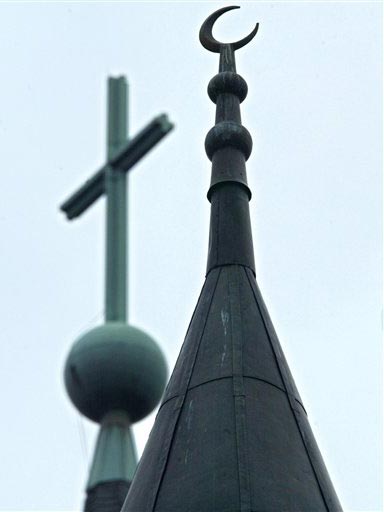
photo credit: Vatican News

Wednesday, July 4, 2018

The Bipolar Life of Ministry


"To identify with Paul's experience we do not need to be shipwrecked or imprisoned or lowered in a basket from a city wall. Even without the physical dangers of Paul's career, anyone who throws himself into the work of Christian ministry of any kind with half the dedication of Paul will experience the weakness of which Paul speaks: the times when problems seem insoluble, the times of weariness from sheer overwork, the times of depression when there seem to be no results, the emotional exhaustion which pastoral concern can bring on - in short, all the times when the Christian minister or worker knows he has stretched to the limits of his capacities for a task which is very nearly, but by God's grace not quite, too much for him. Anyone who knows only his strength, not his weakness, has never given himself to a task which demands all he can give. There is no avoiding this weakness, and we should learn to suspect those models of human life which try to avoid it. We should not be taken in by the ideal of the charismatic superman for whom the Holy Spirit is a constant source of superhuman strength. Nor should we fall for the ideal of the modern secular superman: the man who organizes his whole life with the object of maintaining his own physical and mental well-being, who keeps up the impression of strength because he keeps his life well within the limits of what he can easily cope with. Such a man is never weak because he is never affected, concerned, involved or committed beyond a cautiously safe limit. That was neither Jesus' ideal of life nor Paul's. To be controlled by the love of Christ means inevitably to reach the limits of one's abilities and experience weakness."

- Richard Bauckham, Weakness - Paul's and Ours  

Thursday, July 6, 2017

What Punishments of God are not Gifts?


This from a GQ interview.  Stephen Colbert describes the plane crash that suddenly killed his father and brother when he was 10 years old.
 “ ‘You gotta learn to love the bomb,’ ” he said. “Boy, did I have a bomb when I was 10. That was quite an explosion. And I learned to love it. So that’s why. Maybe, I don’t know. That might be why you don’t see me as someone angry and working out my demons onstage. It’s that I love the thing that I most wish had not happened.”…
I asked him if he could help me understand that better, and he described a letter from Tolkien in response to a priest who had questioned whether Tolkien’s mythos was sufficiently doctrinaire, since it treated death not as a punishment for the sin of the fall but as a gift. “Tolkien says, in a letter back: ‘What punishments of God are not gifts?’ ” Colbert knocked his knuckles on the table. “ ‘What punishments of God are not gifts?’ ” he said again. His eyes were filled with tears. “So it would be ungrateful not to take everything with gratitude. It doesn’t mean you want it. I can hold both of those ideas in my head.”
He was 35, he said, before he could really feel the truth of that. He was walking down the street, and it “stopped me dead. I went, ‘Oh, I’m grateful. Oh, I feel terrible.’ I felt so guilty to be grateful. But I knew it was true.”

Saturday, November 19, 2016

The Givenness of Things

"There is no freedom except when what we are, and do, corresponds to what has been given to us to be and to do."

-Oliver O'Donovan, The Desire of Nations

Thursday, August 25, 2016

A Communion Hymn Meditation: How Sweet and Aweful is the Place


In a few moments we’re going to sing together a favorite Isaac Watts hymn “How Sweet and Aweful is the Place.  It’s a hymn about this great parable –
He opens the first verse by describing the great and admire-able feast of Christ’s Kingdom – It is a feast that is sweet and full of awe … and one that displays the choicest foods from His stores.
And when we join together for that great feast, from our hearts, we will cry out to the Lord – “Why am I a guest?  Why did I hear Your voice inviting me here when so many others choose to starve outside?”
Watts gives us the correct answer.  The Lord replies – “The same sweet love that spread this feast drew you here.  Without it, you also would have refused and perished.”
So Watts finishes the hymn with a prayer for us to sing together.
And it is the application of this Kingdom parable.
After confessing that the only reason we’ve been invited into the Kingdom feast was the sweetness of God’s love toward us, we pray and ask Him to have compassion on the nations and to extend the call of His sweet love to all the earth.  We ask Him to constrain or draw strangers to their true home and to make His Word victorious, that it would triumph in our world.
The fact that unworthies such as we have been invited to Christ’s great banquet-feast fills us with longing to see all of His churches filled with people to join us in singing from our hearts with one voice the hymn of His redeeming grace.
Why did Israel receive the immeasurable blessings of the Covenant?  Why have we received the priceless blessings of the Kingdom?
Not because we earned it.  Not because God knew He’d get a good return on His investment.  In fact, as we’ll see – God-willing – later this season when we get to Lk 17, when we have done all we can, we will still have failed to return God any profit for what He spent on us.

By inviting us to His feast, Christ has been gracious to those who can never repay Him, just as He has called us to do.  And so the Father has exalted Him and will yet still reward Him at the consummation of all things – the resurrection of the just and the wedding feast of the Lamb.

Saturday, April 2, 2016

What does Baptism Mean?


1 Corinthians 12 talks about the kind of body that the Church is.  And the kind of body that the Church is is the kind of body where the weakest members - the members who are least honorable - are afforded and given more abundant honor.  That's the kind of community the Church is.  And every Christian wants the Church to be that kind of community that honors the weak.  The question is: does our practice of baptism actually express that?  Or does the practice of baptism imply that only the strong need apply?  Does the practice of baptism imply that the weak need to get stronger before they get in?  Or are we saying that the weak in their weakness are incorporated into this body that is the body of Christ?

- Peter Leithart

Tuesday, January 26, 2016

Epiphany Prayer


Gracious Father,
Your Son is the desire of every nation. To Those who hunger for love, He is the Bridegroom rising like the morning sun;
To those who yearn for economic prosperity, He is the Creator who turns water to an overflow of finest wine;
To those in search of justice and righteousness, He is the King who brings the incomplete cleansing of the Law to its glorious fulfillment in grace;
To those who long for sacred purpose and devotion, He is the God Who calls many and when they have sacrificed all to come, He provides for them lavishly especially in the times when it appears that they have given up so much just to arrive at a dead 
end.
For those who long for social equity, He is the Lord Who blesses rulers and masters by drawing their servants closest to Himself, so that they are the only ones given to 
see His miracle as it is performed.
O Christ, You are the joy of man’s desiring; the One for Whom our hearts always 
hunger.
Even our sinful desires are just twisted impressions of the God-shaped void within us. And our hearts are always restless until they find their rest in You.
So shine the light of Your face upon us and bless us to draw us under the shadow of Your wing.
Set our feet to walk on Your path in Your steps, Lord Jesus, and fill us in our emptiness with your Holy Spirit. 
Amen.

Wednesday, January 13, 2016

Islam: Mirror of Christendom


An abridged essay by Dr Peter J Leithart; the full essay is available here.

For if anyone is a hearer of the word and not a doer, he is like a man who looks at his natural face in a mirror; for once he has looked at himself and gone away, he has immediately forgotten what kind of person he was.”
—The Epistle of James, 1:23-24

Deep in the pit of hell, the pilgrim Dante came across Mohammed, walking with his torso split open from chin to groin.  The surprise in this scene is not the gruesomeness of Mohammed’s punishment, but the place where this scene occurs: the ninth Bolgia of Malebolgia, in the subcircle of hell reserved for schismatics. Mohammed is not among the idolaters or the pagans, but among sinners being punished for breaking off from the Christian Church, all of whom, appropriately enough, have their bodies rent as retribution for rending the body of Christ.
In treating Mohammed as a Christian schismatic, Dante was not inventing a new perspective (he rarely did), but presenting views widespread in his time. Many in the Western medieval world believed that Mohammed himself had apostatized from Christianity.  Centuries before Dante, John of Damascus (675-749) treated Islam in the final section of his treatise de Haeresibus, calling it the “heresy of the Ishmaelites.”

Monday, January 11, 2016

Why and for Whom do we clap?


An incredible video snippet from David Gallo's TED talk "underwater astonishments", one of the top 10 most viewed TED talks of all time.

A simple question: Why did it end in spontaneous applause?  For Whom were these people clapping?  The octopus?  Gallo?  I think not.  Then for Whom? SomeOne else.

Romans 1.20.

Friday, December 25, 2015

Christmas Prayer of Praise and Adoration


Christmas prayer adapted from Augustine:

All praise to You, O King of Heaven and earth, this Christmas Sunday
For the incarnation;
As Adam was brought forth from the uncursed soil,
so You were born of a virgin;
When man’s Maker was made man,
that He Who made the Milky Way, might nurse at His mother’s breast;
the Bread hunger,
the Fountain thirst,
the Light sleep,
the Way be a tired Traveler;
the Truth slandered by false witness,
the Teacher flogged,
the Foundation hung upon a wooden beam;
that Strength weaken;
that the Healer be wounded;
and Life die.
For these great mysteries and for beautiful gospel of peace
we give You thanks today and forever.
Amen.

Tuesday, October 27, 2015

God's Finger, My Forehead, and Her Intricate, Perfect Ears


[More than 10 years ago, in a seminary workshop outside of Greenville, SC, I heard a speaker read this passage.  Since then I've ruminated on it scores of times, though never remembering its author.  This morning, in a Ken Myers interview of Mary Eberstadt, I was delighted to hear it referred to again - with the author's name attached - Whittaker Chambers!  Enjoy.]

“It was shortly before we moved to Alger Hiss's apartment in Washington. My daughter was in her high chair. I was watching her eat. She was the most miraculous thing that had ever happened in my life. I liked to watch her even when she smeared porridge on her face or dropped it meditatively on the floor. My eye came to rest on the delicate convolutions of her ear — those intricate, perfect ears.

The thought passed through my mind: 'No, those ears were not created by any chance coming together of atoms in nature. They could have been created only by immense design.'

The thought was involuntary and unwanted. I crowded it out of my mind. But I never wholly forgot it or the occasion. I had to crowd it out of my mind. If I had completed it, I should have had to say: Design presupposes God. I did not then know that, at that moment, the finger of God was first laid upon my forehead.”

- Whittaker Chambers, Introduction, Witness

Thursday, October 22, 2015

As the Angels in Heaven: A Theological Reflection on the Plight of Bruce Jenner


Long after his sordid story broke, we are still talking about Bruce Jenner.  His sad state fascinates us and brings many of our societal failures and follies to the surface.  Chief among them is our destructive devotion to the ultimacy of personal choice.  Devotion that borders on idolatry.
In this man's fractured life, we see the folly of making the subjective will ultimate. 

When a full-grown man says something like, "as far back as i can remember, i have felt like and identified as a woman," and we are unable to respond with anything but, "well, then you must really be a woman," we are in deep trouble.
Certain fundamental things precede memory.  Certain truths are objectively true about us - whether we prefer and identify with them or not.  Several of these objective truths of reality come by way of the body we're given. We receive our bodies, and therefore our genders, long before we possess anything like memory or feeling or a sense of identity or even any self awareness at all.
You show up at conception and there it is - already right there in your DNA from the first second of your life.  And centuries after you die, if archaeologists happen to dig up your bones, one of the first things they will determine by the most basic testing is whether you were male or female.

When we hear ourselves asking questions like - "Can you imagine being trapped in a body you don't belong in?" ... as if you could be switched at birth into a foreign body by accident or trickery... as if - because of its gender - your body were something you could be "trapped inside of" like an elevator in a blackout.

Friday, October 16, 2015

The Grave Importance of Church Funerals and Cemetery Yards


"[The problem is] not that our culture doesn't believe in God.  It's that our culture doesn't believe in death ... really.  And as a result, [we] don't really get the point.  Our culture is dedicated to distracting us from this inconvenient truth.  We are dedicated to being distracted from distraction by distraction."

- David Bentley Hart

Wednesday, September 30, 2015

Monday, July 20, 2015

Psalm 23 a Modern Secularized Version

We will have no shepherd, and yet we shall not want …
By getting a competitive and marketable degree I have postured myself to lie down in the green pastures.
By attaining a certain socio-economic status I am able to reside beside the still waters,
I maintaining a generally law-abiding lifestyle I walk on the paths of practicing random acts of kindness from time to time for the sake of a tolerant coexistence,

Yea, though I walk through the valley of the shadow of death with the help of my therapist I will fear no evil; my expansive healthcare benefits and the technical advances of medical researchers comfort me.

Thanks to modern biology, nutritional science, and economics – I have prepared a table for myself and my elected officials wield our military might to keep our enemies as far away as possible.

I’m able to take advantage of the convergence of Madison Avenue and Wallstreet so that my head is anointed with this season’s latest fashionable accessories, and inasmuch as I’m able to be savvy and tap into their lifegiving streams - my cup runneth over.


Surely material abundance and the right to make my own personal choices about truth and reality shall follow me all the days of my life and then afterward I will dwell in the house of bliss forever according to the details of my own preferred religion’s happy ending – unless of course there is no life after death in which case, I won’t.

Monday, July 6, 2015

Sin, Righteousness, and Judgment


Within the churches are those who defend the historic Christian teaching on sexuality.  It is assumed that there will always be some discernible dissonance between the Church and the world and that part of the mission of the Holy Spirit through the Church is, as Jesus says in John 16, to “tell the world that it is wrong about sin and righteousness and judgment.” 
On the other side are those who reject the historic Christian teaching and who seem to believe that the world, as represented by its most self-consciously progressive institutions and thinkers, is ahead of the Church in ushering in the Kingdom of God. Indeed, that the world is right in telling the Church that it is wrong about sin and righteousness and judgement. They say that God is doing a new thing. But they seem unable to imagine that God might say ‘no’ to any new thing done in the world in the name of progress. There seems to be no room on the part of the revisionists for any truly prophetic word to be spoken to the world’s claims about love and justice.

-Ken Myers